|
CAD for leather goods and small leather goods |  |
 |
 |
|
CAD for leather goods and small leather goods | |
|
|
| Mozart | Liszt | Virtual-Design | Support | Contacts |
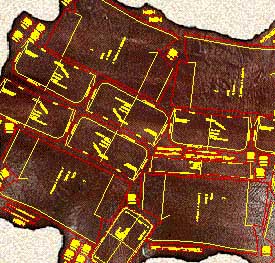
| Mozart is a CAD realized following the requests and
suggestions of leather goods pattern-makers to simplify and expand their work being
them free to design according to their ideas. Mozart requires AutoCAD® or ZWCAD®. The license of Mozart does not include the license of AutoCAD® or ZWCAD® Mozart 8 is available for AutoCAD® up to version 2026 and for ZWCAD® up to version 2025. |
|
Quick learning Built on pattern-makers' requirements Mozart shares his working method giving full liberty to design the model. The pattern-maker can concentrate himself on the model to be realized. He does not have to code the materials or pieces before or during the drawing. Freely customizable The user can easily change many settings of Mozart: colors, the method of calculating the bill of materials and the bill of working times and many other parameters. Mozart can also load and use custom toolbars, scripts and commands written by the user. |
|
|
Flexibility The user is free to choose the names of the patterns and their hierarchy. Each pattern is a single file and Brands, Lines, Seasons etc. can be organized by folders. Each pattern is independent from the others and can be copied or moved in whole or in part from one folder to another like any other file. The bill of materials and the bill of working times can be performed in different ways and the reports are produced as ASCII text or Excel document. |
|
Data exchange The patterns can be read using many others CAD programs. The cutting can be done using a wide range of machines from vertical or flatbed plotters to knife, laser or water-jet cutting machines. The bill of materials, the bill of accessories and the bill of working times can be exported to others data management systems. Development The open structure of Mozart means it can be constantly improved according to users suggestions and requests. The upgrade of Mozart does not oblige the user to upgrade the other components of the CAD system. Plug-ins increase the power and the flexibility of Mozart. |
|
| Plug-ins add specific functions to Mozart. The user himself can write his own plug-ins, Mozart will automatically load them. Plug-ins allow to customize Mozart's installations to the needs of the user and reduce the cost because they avoid the purchase of what is not needed. Users can request the development of personal plug-ins to create special reports or drawing functions. On request personal plug-ins are not available to other users in order to protect their confidentiality. |
This paper proposes a methodology for analyzing “popular videos” and informal filmographic references on Peperonity.com, a mobile-first social network that lacked native analytics. Using the Internet Archive’s Wayback Machine, forum scraping, and contemporary mobile culture studies, we identify content categories (amateur short films, music video clips, fan tributes) and engagement signals (download counts, comments, featured slots). Results are presented as a qualitative filmography reconstruction rather than a quantitative dataset.
In the digital age, the way we consume entertainment and information has dramatically shifted. Platforms like Peperonity.com have emerged as significant players in this new landscape, offering a variety of content that caters to diverse interests. Among the plethora of content types, "anchor sex videos" have gained notable attention. But what does this trend signify, and how has it impacted both the creators and the audience on Peperonity.com? anchor sex videos peperonity.com
/video, /popular, and user profile pages.Given the nature of online content creators, a filmography might not be as traditionally structured as that of a film or TV show actor. Instead, it might look like a list of popular or notable videos: Feature Title: "Anchored in Entertainment: The Rise of
Highlight trending and nostalgic videos across the platform, emphasizing community engagement from the feature-phone era. Primary: Wayback Machine snapshots (2008–2013) of /video ,
In the history of the internet, the transition from desktop-centric browsing to mobile-first consumption created a unique intermediate period (circa 2005–2012). During this era, bandwidth was expensive, smartphone penetration was low in developing markets, and centralized video streaming platforms like YouTube were often inaccessible on feature phones (such as Nokia S40 series or early Sony Ericsson models).
Enter Peperonity.com. Founded as a mobile community builder, Peperonity allowed users to create WAP-friendly websites (often called "sites" or "blogs") directly from their mobile devices. While intended for social networking, the platform evolved into a massive, unregulated repository for media. This paper posits that Peperonity served as a shadow library for filmography, allowing users to curate and distribute video content that was otherwise inaccessible through legitimate channels on early mobile devices.
All product names, brand names or trademarks named here belong to their respective holders. |