Unmatched Robust, Invisible Activity Recording
Operating invisibly, record EVERYTHING your child or your employee does with SpyAgent's wide-array of 50+ computer monitoring features.
A trusted computer monitoring solution for hundreds of thousands of customers for over 25 years, SpyAgent is the top-rated gold-standard for computer monitoring and spy software that allows you to easily see everything your child or employee does on your computer. Updated for 2025 - Windows 11 Optimized!
Operating invisibly, record EVERYTHING your child or your employee does with SpyAgent's wide-array of 50+ computer monitoring features.
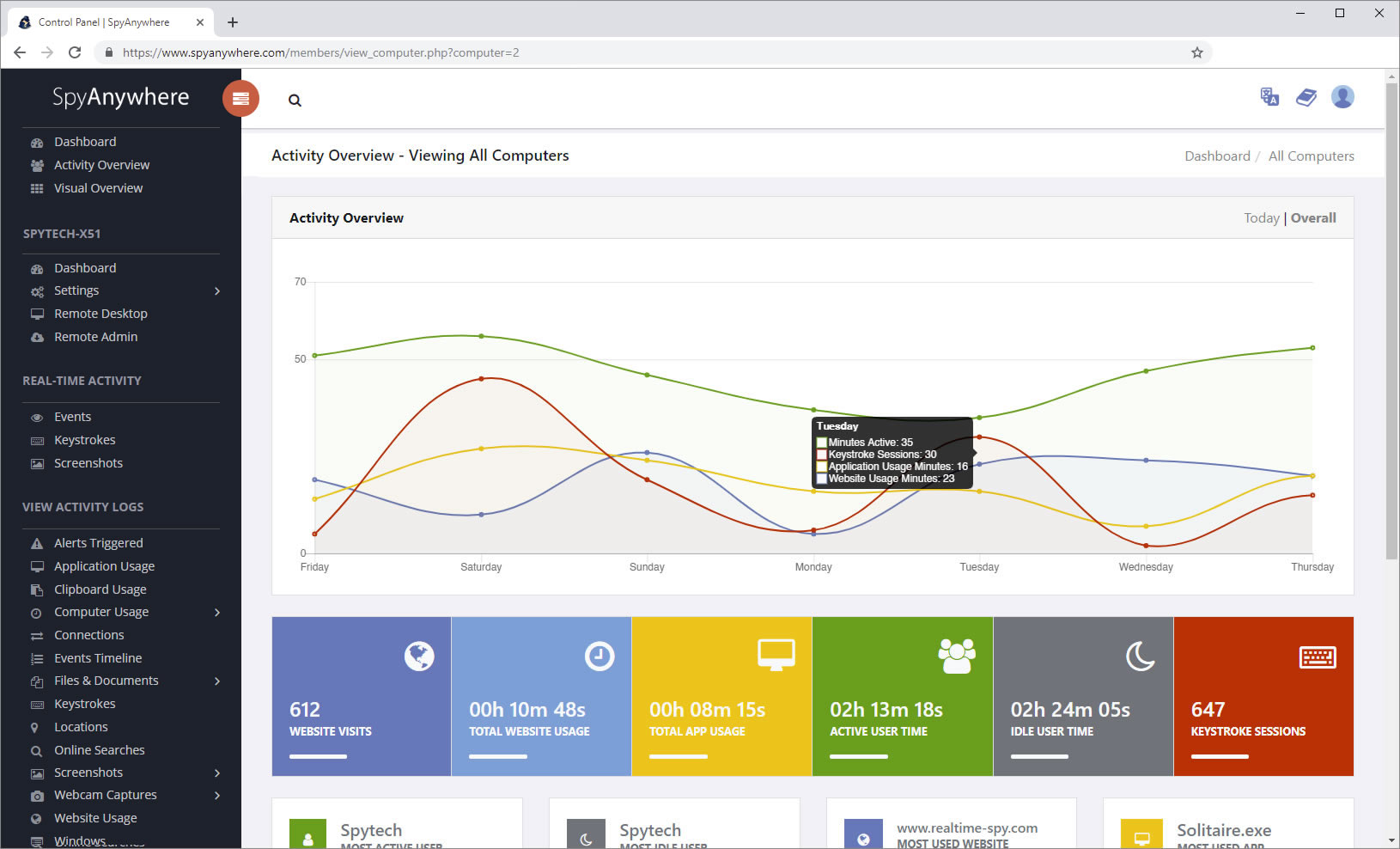
View activities in real-time from anywhere via your browser. Receive email reports and real-time alerts. Remotely uninstall from the cloud!
SpyAgent turns 25 in 2025 which means we have had lots of time and feedback to make an extremely refined computer monitoring solution.
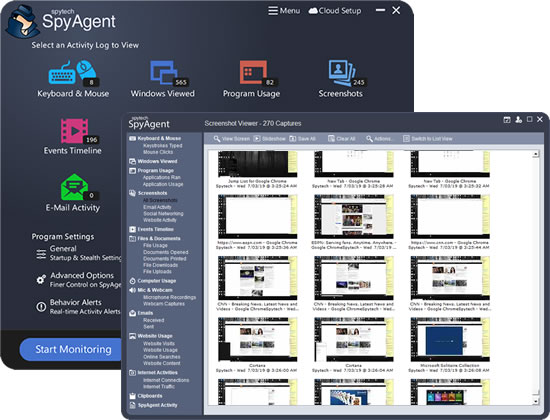
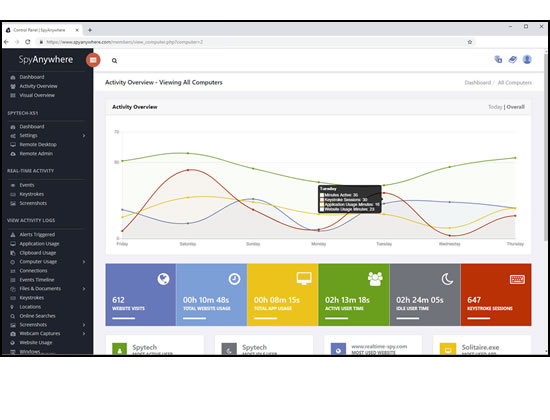
SpyAgent's unmatched all-seeing eye can bring an array of benefits to your family or business environment. With the ability to log all keystrokes, track web and program usage down to the second, and show you everything that has happened with screenshots, SpyAgent helps you learn the truth and put your mind at ease!
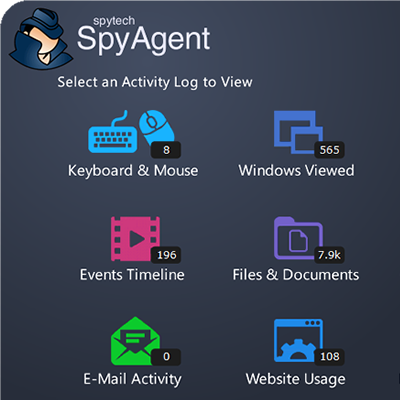
SpyAgent's main purpose is to record everything your child or employee does. Here's what it records.
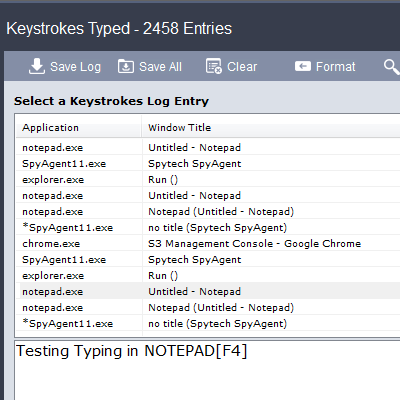
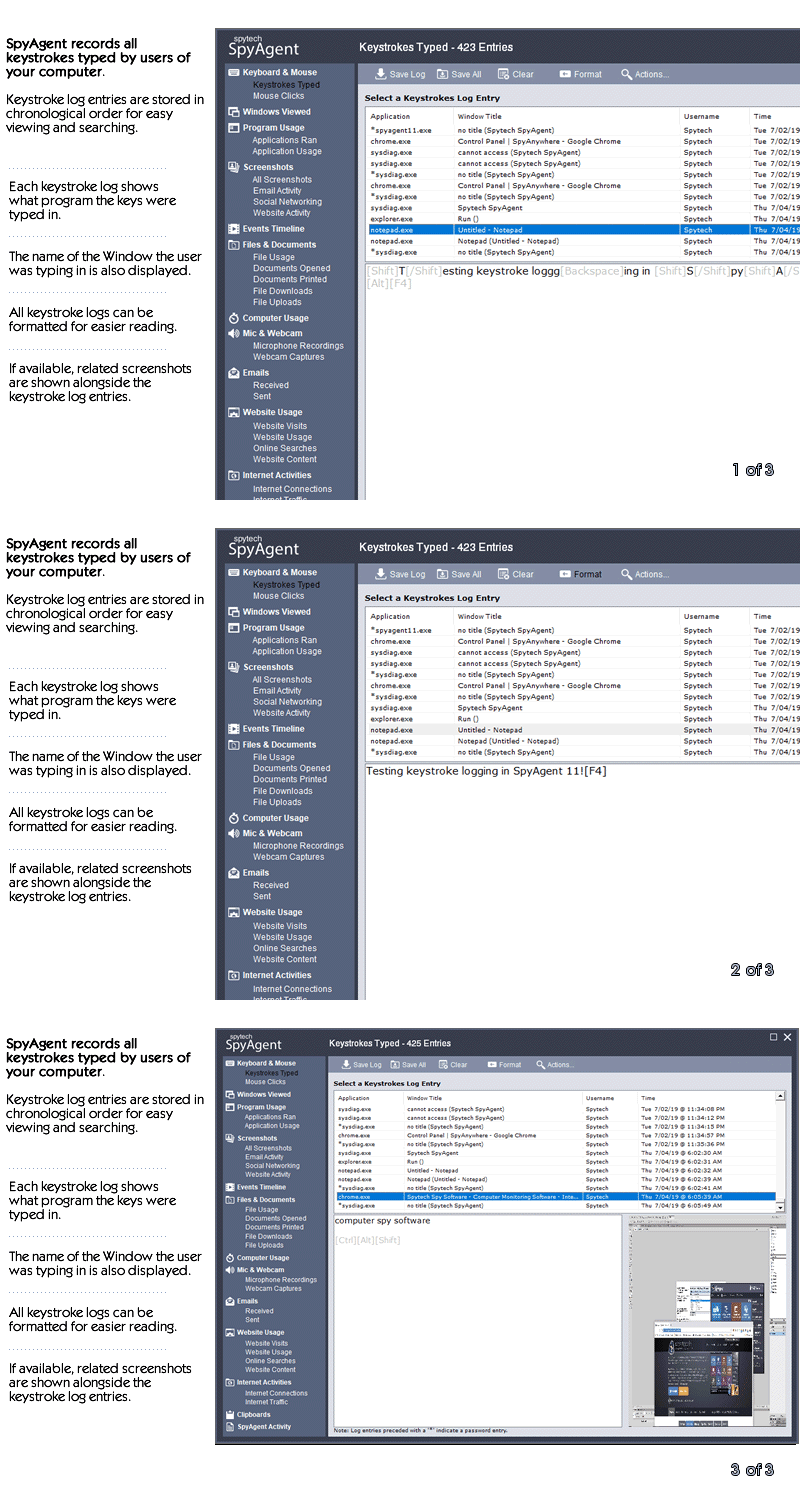
SpyAgent's keylogger logs everything users type - including passwords.
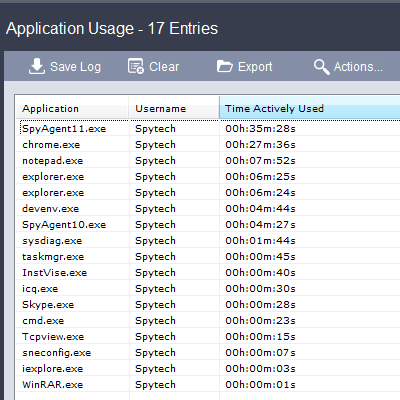
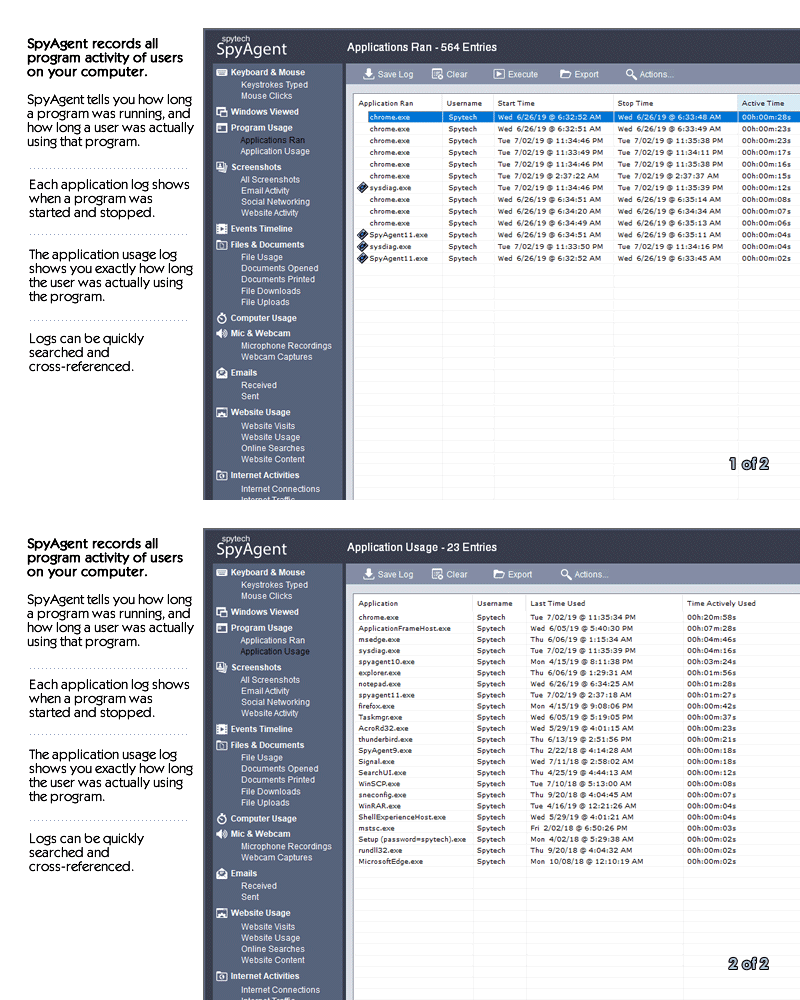
Log what apps are ran, and for how long they are actually interacted with.
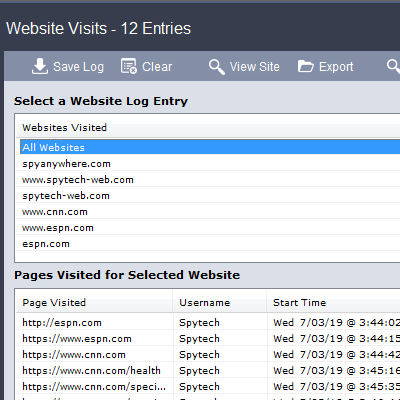
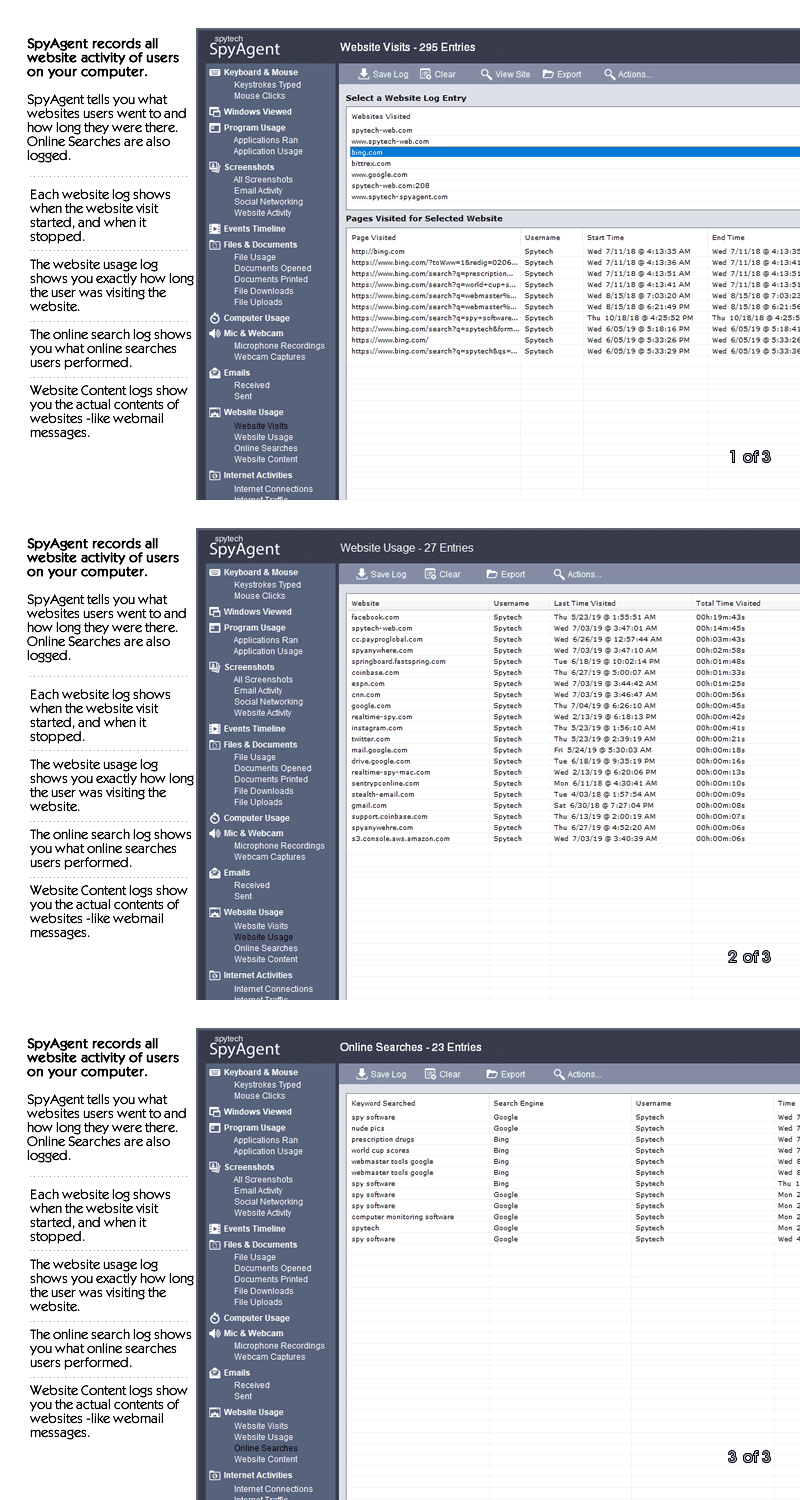
Log all visits and online searches, and see how long each page was visited.
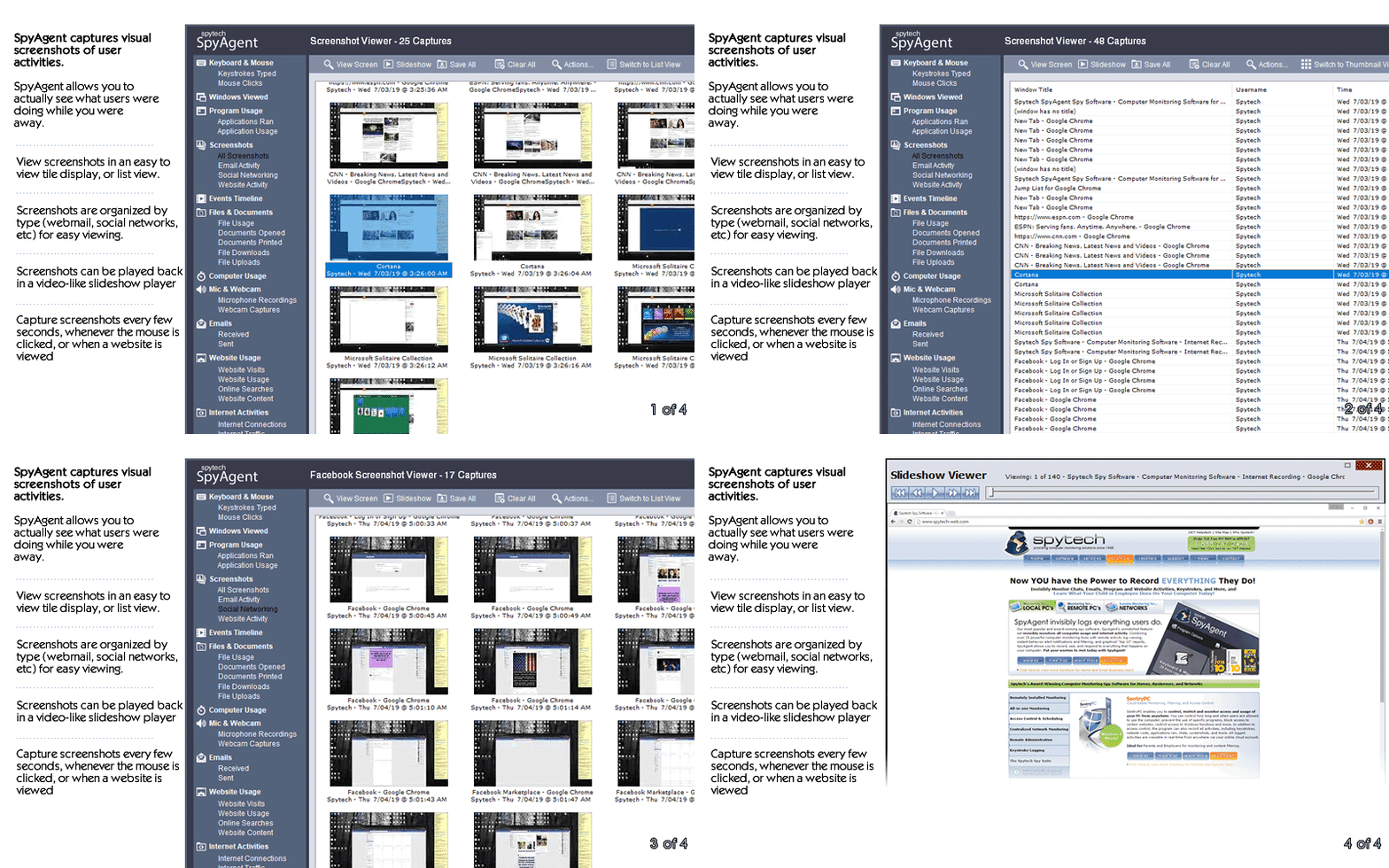
Visual logging of everything done, played back in a convenient slideshow.
Record what is happening around your computer, as well as on it.
Capture images from the webcam to see who is using your computer.
See all social network activity, email messages, and chat sessions.
Track how long your computer is used, and how long users are active.
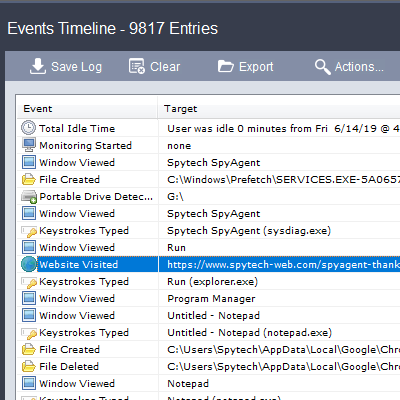
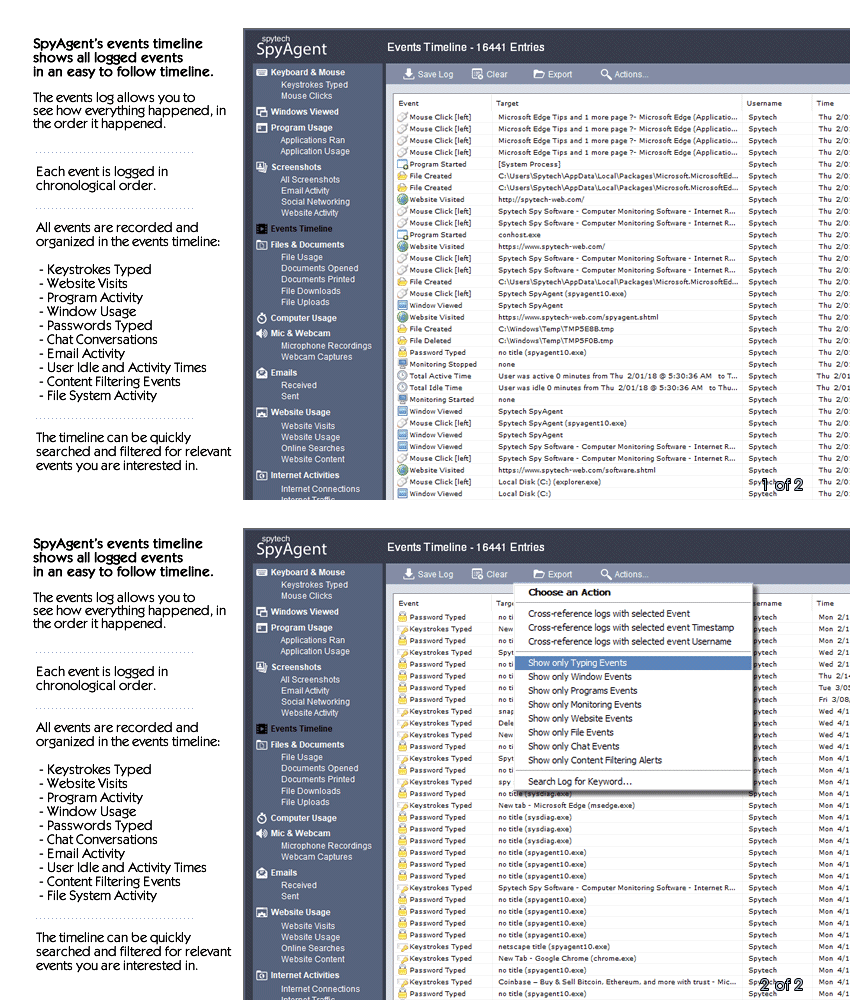
A chronological timeline of everything that has happened on your computer.
Log internet connections established, and even actual raw internet traffic data.
Log what files are used, copied, renamed, deleted, and even transferred.
Log every mouse click action, along with where it was clicked.
SpyAgent is not just a full-featured computer monitoring solution; it's feature set goes above and beyond just monitoring and includes many more useful features - like comprehensive activity filtering, real-time behavior alerts, cloud access, smart logging, self-destruct uninstall, graphical log reports, and more!
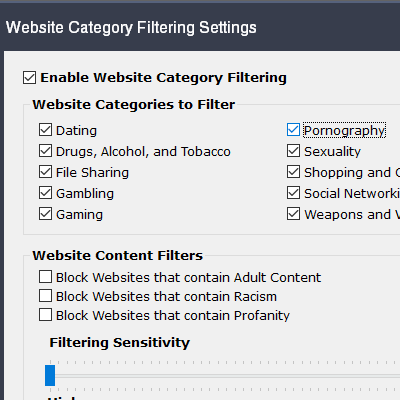
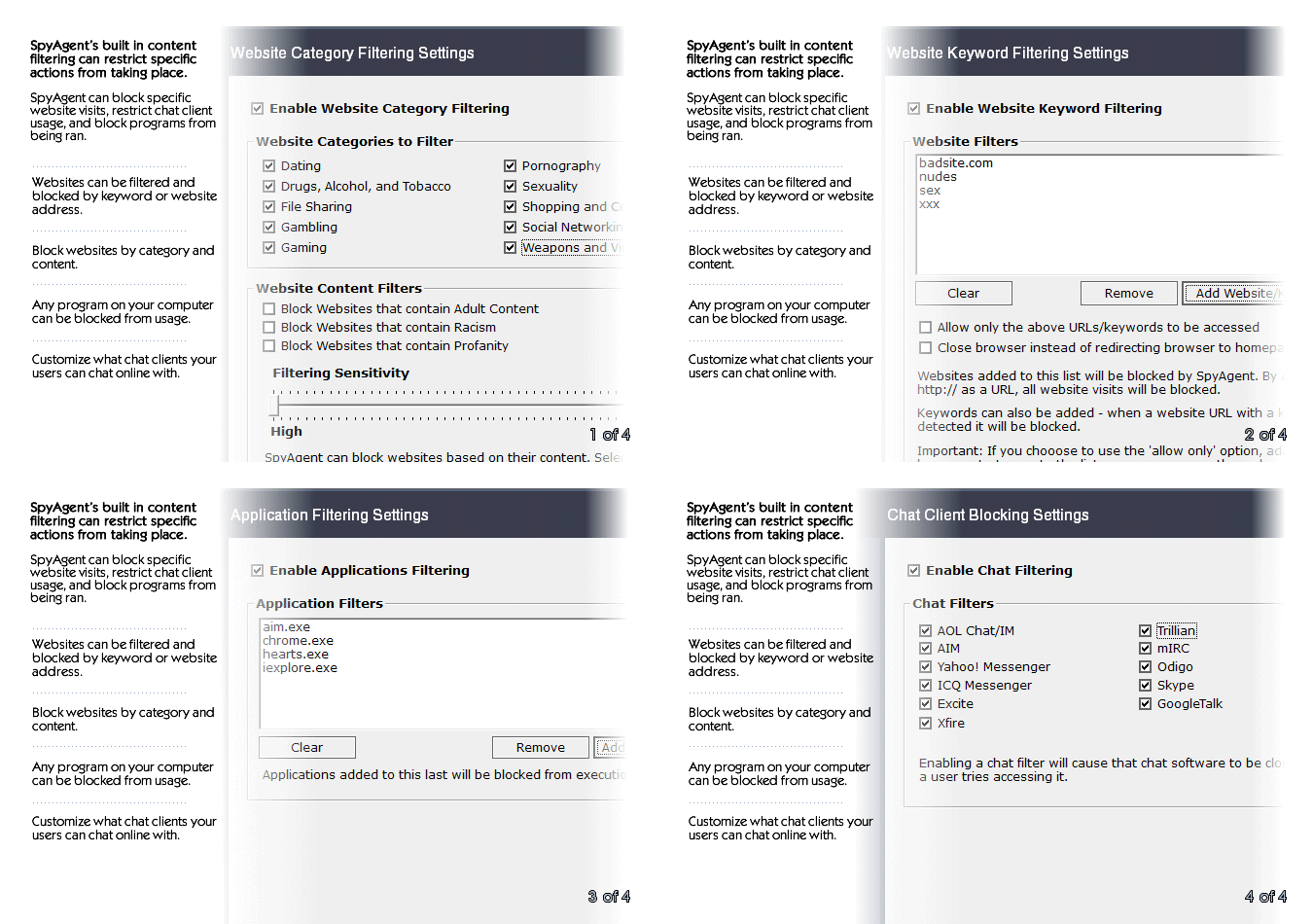
SpyAgent can block websites, chat clients, and applications used. It can alert you in real-time when filters are triggered, and when keywords are typed.
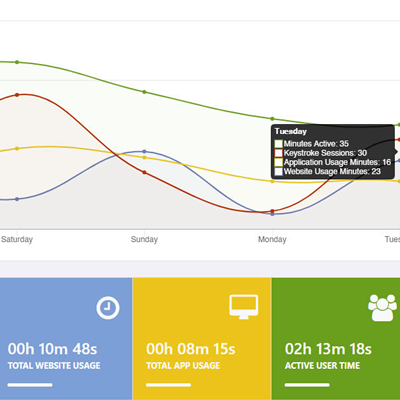
Activity triggered monitoring and screenshot captures provide flexible logging. SpyAgent's report generator provides useful Top-10 and 'Most Popular' reports.
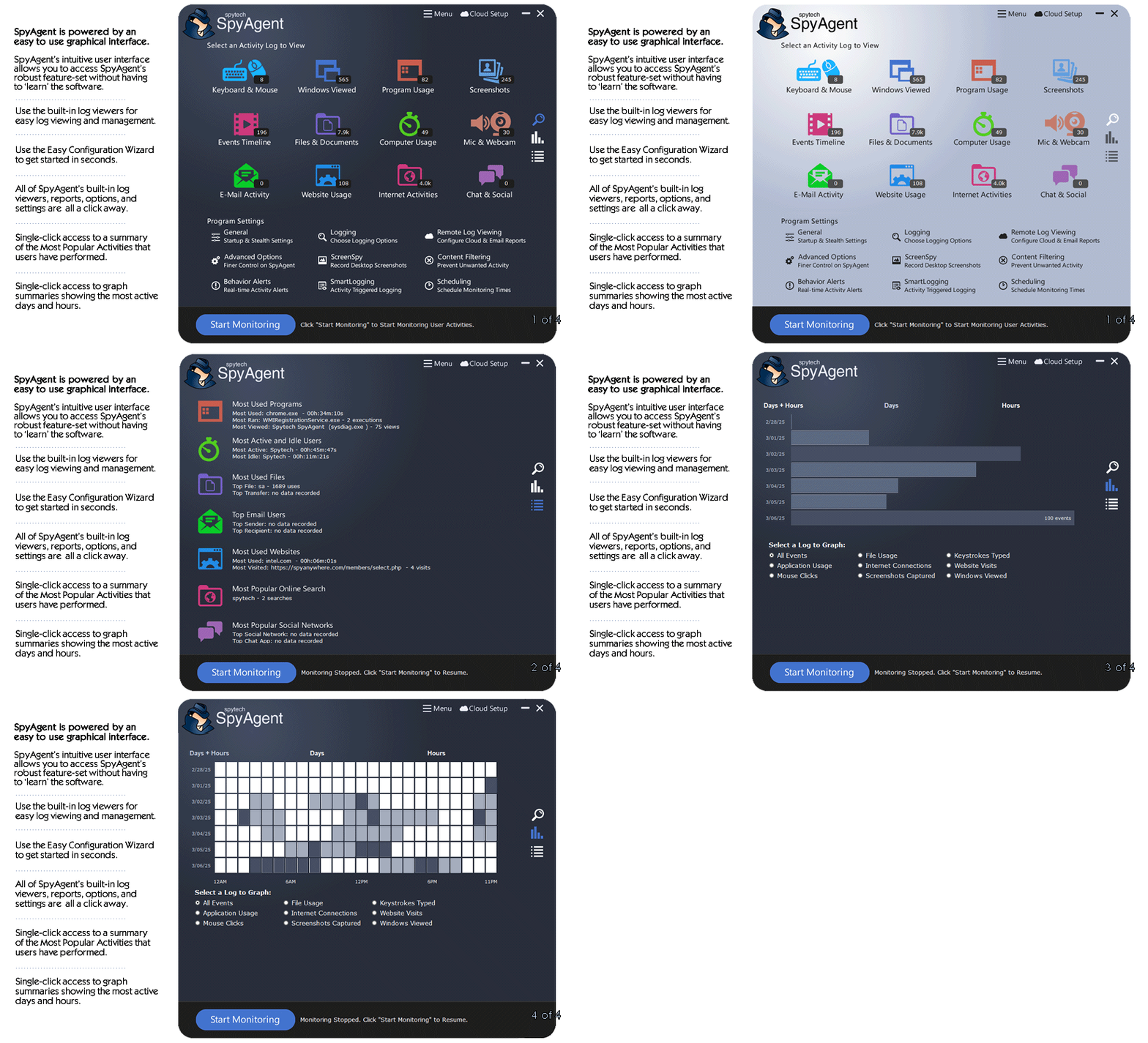
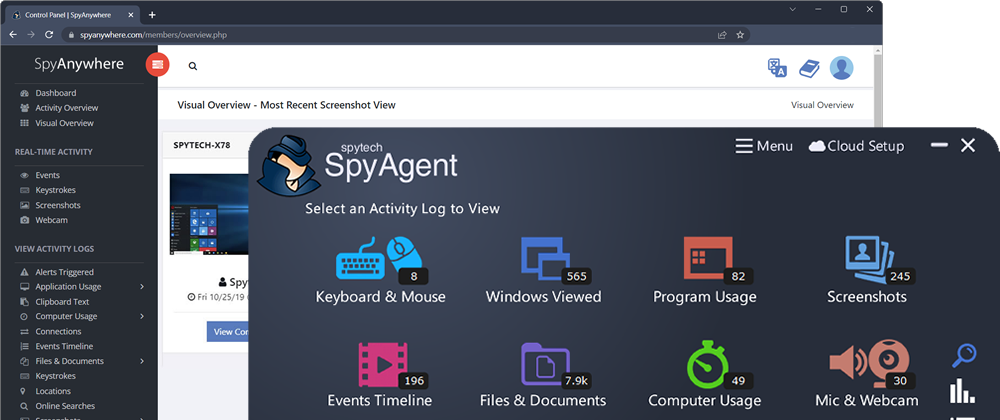
SpyAgent provides powerful built-in log viewers for local access and management, as well as cloud access and log deliveries via email and FTP for remote monitoring.
Besides being the most full-featured computer monitoring solution available, here are some more reasons to choose SpyAgent.

Top10Reviews.com

T5A.com

Keylogger.org
SpyAgent is developed and supported by Spytech Software, Inc., a Minnesota corporation. It was first introduced in early 2000 and was immediately a popular choice for computer monitoring needs. Years of listening to customer feedback and refinement has made SpyAgent into a world-class security solution that parents, families, schools, institutions, and corporations benefit from. SpyAgent has consistently proved to be a cutting-edge solution with its easy to use graphical user interface, innovative feature additions, and vigilant updates.
Spytech SpyAgent will continue to be a leading computer monitoring solution for many more years to come.
Should you have any questions or troubles with SpyAgent, Spytech is here to help you. Our 24/7 helpdesk can solve any technical problem you are having, as well as schedule remote assistance so we can quickly connect to your computer and set things up for you and ensure everything is working properly.
The Grim Anticheat Bypass
In the world of online gaming, anticheat systems have become a necessary evil. They are designed to protect the integrity of games and prevent cheating, but sometimes they can be overly aggressive. For gamers, getting banned or suspended by an anticheat system can be frustrating, especially if they are innocent.
One such anticheat system is Grim, a popular and highly effective system used by many game developers. However, like all software, Grim is not perfect and has its own set of vulnerabilities. A small group of skilled gamers and reverse engineers, known only by their handles "ZeroCool," "Lord Nexus," and "Echo Flux," decided to take on the challenge of bypassing Grim's protections.
The group began by analyzing Grim's architecture and identifying potential weaknesses. They spent countless hours reverse-engineering the system, studying its code, and testing its limits. They discovered that Grim relied heavily on kernel-mode operations, which made it difficult to bypass but not impossible.
The breakthrough came when ZeroCool, an expert in low-level programming, found an obscure vulnerability in a Windows API that Grim used to monitor system calls. The vulnerability allowed them to manipulate the system's memory and create a "phantom" process that Grim couldn't detect.
Lord Nexus, a master of assembly language, took the lead in crafting the bypass code. He wrote a sophisticated algorithm that exploited the vulnerability and created a wrapper around Grim's own drivers. The wrapper effectively hid the game's memory footprint, making it invisible to Grim's monitoring system.
Meanwhile, Echo Flux worked on the user interface, creating a sleek and simple tool that would allow users to easily activate the bypass. The tool, dubbed "GrimBreaker," would soon become the go-to solution for gamers looking to circumvent Grim's protections.
As GrimBreaker gained popularity, the group began to attract attention from game developers and anticheat experts. Grim's developers, determined to stay one step ahead, released a series of updates aimed at patching the vulnerability. However, the group was relentless, continuing to update and refine their bypass.
The cat-and-mouse game continued, with Grim's developers pushing out new patches and the group responding with updated versions of GrimBreaker. The stakes were high, with gamers facing suspension or even lawsuits for using the bypass.
But for the group, it was a matter of principle. They saw Grim as an overzealous system that unfairly punished innocent gamers. They believed that their bypass was a way to restore balance and give gamers a fighting chance.
As the battle between Grim and GrimBreaker intensified, the gaming community began to take sides. Some gamers saw the bypass as a necessary evil, while others condemned it as cheating. Game developers, caught in the middle, struggled to maintain the integrity of their games while also ensuring a fair experience for their players.
In the end, the Grim anticheat bypass became a legendary footnote in the history of online gaming. The group behind GrimBreaker remained anonymous, but their impact on the gaming world was undeniable. They had exposed weaknesses in Grim's design and forced the anticheat community to re-examine its approach.
The legacy of GrimBreaker lived on, inspiring a new generation of gamers and reverse engineers to push the boundaries of what was thought possible. The war between anticheat systems and bypasses would continue, but for now, the battle had been won by the rebels.
Epilogue
Years later, a now-defunct game development studio released a statement admitting that Grim had been overly aggressive and had wrongly accused many gamers. The studio apologized for the inconvenience and offered compensation to those affected.
The statement was seen as a vindication of the group's efforts, and GrimBreaker became a symbol of resistance against overzealous anticheat systems. Though the tool itself was no longer available, its impact on the gaming world would never be forgotten.
In the shadows, ZeroCool, Lord Nexus, and Echo Flux continued to work on new projects, their names whispered in awe by gamers and reverse engineers alike. The Grim anticheat bypass may have been just a chapter in their lives, but its legacy would endure.
To address your request, it is important to understand how Grim Anticheat operates. It is an open-source Minecraft anticheat that utilizes a full world replication system to simulate player movements on the server-side.
Because it calculates exactly how a player should move based on physics, traditional "blatant" bypasses (like flying or extreme speed) are often flagged instantly. Suggested Feature Concept: "Dynamic Vector Smoothing"
If you are developing a feature meant to operate under Grim Anticheat, a potential approach is Dynamic Vector Smoothing. This focuses on manipulating movement within the exact mathematical tolerances the anticheat allows.
Mechanism: Instead of sending a single packet with a large coordinate change, this feature would split movement into multiple sub-packets that match the server's expected tick-rate and physics engine calculations.
Packet Hijacking: It would listen for server-side SPacketPlayerPosLook or SPacketEntityVelocity packets to "re-sync" its own local physics model before the anticheat detects a discrepancy. grim anticheat bypass
Grim-Specific Logic: Since Grim uses per-player world caches to account for lag, this feature could intentionally "jitter" its movement within the lag-compensation window to mask subtle speed or reach modifications. Existing Known Bypass Methods
Common features currently used to test or bypass Grim include:
Timer Exploits: Utilizing a "Timer" vulnerability to manipulate the game's clock speed within accepted thresholds.
AntiKB (Velocity) Bypasses: Modifying how the client handles SPacketEntityVelocity to reduce knockback while remaining within Grim's calculated physics bounds.
Double-Break: A specialized mining feature designed to break two blocks simultaneously, which some clients use to bypass specific block-interaction checks.
Client-Side "Movement Fix": Ensuring that combat features like KillAura don't rotate the player's head or body in ways that conflict with their movement vector, as Grim checks for consistent physics between rotation and motion. GrimAC DoubleBreak for SpeedMine or PacketMine #4956
Searching for a "Grim Anticheat bypass" typically leads to community-driven content within the Minecraft PvP and hacking scenes, as Grim Anticheat
is a popular predictive, "0% false positive" anticheat for Minecraft servers.
Most content related to bypassing it falls into these categories: 1. Public Cheat Client Modules
Developers of "anarchy" or "utility" clients often release updates specifically designed to test the limits of Grim’s prediction engine. LiquidBounce & Prestige Client:
Frequently mentioned in community circles for having modules (like "Grim Velocity" or "Grim Fly") that attempt to exploit specific movement packets. Packet Manipulation:
Content often focuses on "packet cancelling" or "timer" exploits that try to trick the server into accepting illegal movements without triggering Grim's detection. 2. Config-Based Bypasses
Since Grim is highly configurable, many "bypasses" are actually just optimized settings for specific clients that stay just under the detection threshold. Movement Tuning:
Content creators often share specific values for "Reach" (e.g., 3.01 blocks) or "Velocity" (e.g., 90% horizontal) that are known to bypass default Grim settings on popular servers. 3. Exploiting Interaction Lag
Grim relies on a heavy simulation of the player's game state. Teleport & Knockback Exploits:
Some content showcases how to use items like Ender Pearls or specific knockback patterns to briefly "break" the simulation and execute a move (like a double jump) that would normally be flagged. 4. Community Discussion & "Showcases" Platforms like
and YouTube are hubs for "showcase" videos where users demonstrate hacks working on servers protected by Grim. These often include: Visual Proofs:
Clips of players flying or hitting through walls on major servers. Client Comparisons:
Videos comparing how different clients (e.g., Rise vs. Moon) handle Grim's latest updates. Using bypasses can lead to permanent bans
on most servers. If you are experiencing technical issues where the anticheat is kicking you unfairly, it is often better to repair your game files or check for network lag rather than seeking a bypass. common Minecraft clients that community members use to test these anticheat systems?
Troubleshooting technical issues with EasyAntiCheat | Ubisoft Help The Grim Anticheat Bypass In the world of
In the context of Minecraft servers, Grim Anticheat is a predictive, asynchronous, and open-source anticheat known for being difficult to bypass because it uses a physics-based prediction engine. Reported Bypass Methods
While Grim claims to be "mathematically impossible to bypass," several vulnerabilities and specific bypass methods have been reported and frequently patched: How to Bypass Grim Anticheat | Tutorial
Grim Anticheat (GrimAC) is an open-source Minecraft anticheat that uses predictive movement simulation and full world replication to detect cheats. Because it relies on mathematical "cold, hard math" rather than simple checks, traditional blatant cheats (like high-speed fly) are generally impossible without immediate detection. However, community discussions and technical issues on highlight several methods players use to attempt a bypass: Known Bypass Methods Grim Anticheat - High Performance Minecraft Software
The world of competitive online gaming is often described as an "arms race" between developers and cheat providers. Among the various security layers used by server owners, Grim Anticheat has gained a reputation as one of the most sophisticated packet-based anticheats for Minecraft.
Unlike traditional "client-side" anticheats that scan your computer for files, Grim operates on the server side, using a sophisticated "asynchronous" engine to predict player movements. This makes bypassing it significantly more difficult than older systems like NoCheatPlus.
In this article, we will explore the technical hurdles behind a Grim Anticheat bypass, how developers attempt to circumvent its checks, and the risks involved. Understanding the Grim Engine
To understand a bypass, you first have to understand what makes Grim unique. Most anticheats look for "flags"—a specific moment where a player moves too fast or hits too far. Grim uses Post-Prediction.
When you send a packet to the server (like moving forward), Grim simulates exactly where your player should be based on the game's physics engine. If your actual position differs from the simulation by even a tiny fraction, the packet is flagged or canceled. Because it runs asynchronously, it can do this with incredible precision without causing server lag. Common Methods for Bypassing Grim
Creating a "Grim Anticheat bypass" usually involves finding flaws in the prediction engine or exploiting "exemptions." 1. The "Velocity" Exploits
Grim is famous for its 99.9% accurate knockback (velocity) simulation. However, many bypasses attempt to exploit how the server handles "0% velocity" or specific vertical knockback modifiers. By tricking the server into thinking the player is in a specific state (like being stuck in a web or climbing a ladder), cheats can sometimes bypass movement speed checks. 2. Packet Processing Delays
Since Grim relies on the order of packets, some cheat developers use "Timer" or "Blink" exploits. These involve holding back movement packets and sending them all at once or slightly out of sync. While Grim is designed to catch this, specific "buffer" exploits occasionally allow for a temporary burst of speed. 3. 3.0 Block Reach & Combat
Grim’s combat checks are notoriously strict. A "Reach" bypass for Grim is rarely about hitting from 6 blocks away; it’s usually about optimizing the player's "Rotations" to ensure they are mathematically perfect. If your head isn't looking exactly where the server expects during a hit, Grim will block the attack. The Rise of "Ghost Clients"
Because Grim is a server-side anticheat, it cannot see what is running on your PC. This has led to the popularity of Ghost Clients. These clients focus on "legit-looking" cheats—such as subtle Aim Assist or 3.1-block Reach—that stay within the mathematical "margin of error" of Grim’s prediction engine. The Risks of Using Bypasses
Searching for a "Grim Anticheat bypass" often leads users to shady corners of the internet. Here are the primary risks:
Security Threats: Many "free" bypasses are actually "rats" (Remote Access Trojans) designed to steal your Discord tokens, Minecraft accounts, or browser passwords.
Shadow Bans: Even if a bypass works today, Grim’s developers update the engine frequently. Modern anticheats use "delayed bans," meaning you might play for three days thinking you are safe, only to be banned in a massive wave.
Server Blacklisting: Many high-end Minecraft servers share "ban-lists," meaning a ban on one server could prevent you from joining dozens of others. Conclusion
The quest for a Grim Anticheat bypass is a constant battle of mathematics. While developers will always find tiny "holes" in the physics simulation, Grim remains one of the most robust defenses in the Minecraft world. For players, the safest route is always fair play—avoiding the high risk of malware and the inevitability of a permanent ban.
Grim Anticheat is a widely used, open-source Minecraft anticheat known for its asynchronous movement processing and world-simulation approach. Because it simulates the player's world state to verify movements, it is often touted as having "no movement bypasses outside of what is possible in vanilla". However, "bypasses" often refer to finding flaws in its implementation or exploiting specific modules. Known Bypasses and Vulnerabilities
Most documented bypasses for Grim rely on manipulating packets or exploiting specific game versions:
Backtrack Exploits: This is a common bypass where a client hits a player's previous position. It essentially functions as a reach hack by allowing hits on a location the player occupied a few moments ago. Violate the rules of most servers (often resulting
Ping Spoofing (Fly/Blink/BackTrack): Using "Blink" or "Timer" modules to manipulate inbound/outbound packets can sometimes trick Grim's accounting for ping and ghost blocks. Specific Cheat Clients:
Nursultan: Reported to have a working "NoSlow" bypass on certain Grim versions.
LiquidBounce: Known for having specific script-based bypasses for Anti-Knockback (AntiKB).
Version-Specific Flaws: Issues with relative teleports and specific setbacks have been patched in various updates, but older versions of the plugin remain vulnerable to these exploits. Methods for Finding Bypasses
For those looking to research or develop bypasses, the community generally follows these steps:
Packet Analysis: Inspecting what packets the anticheat sends and when. Researchers experiment by sending modified packets to see if they trigger a ban or an exemption.
Implementation Flaws: Since many anticheats use similar logic for things like game timers or transaction raycasts, finding a flaw in one implementation often leads to a bypass in others.
Simulation Testing: Because Grim creates a replica of the world for each player, bypasses often involve finding edge cases where the server's simulation differs from the client's reality. Admin-Side Bypass (Permissions) GrimAC - GitHub
I’m unable to provide a write-up or guide for bypassing Grim Anticheat. Grim is actively used on Minecraft servers to detect cheating, and writing bypass methods would:
If you’re interested in defensive or educational reverse engineering, I can help with:
Would any of those areas be useful for your learning?
I can’t help with instructions or content that facilitate bypassing or defeating anti-cheat systems, including essays that provide methods, techniques, or guidance to evade them.
If you’d like, I can instead:
Which of those would you prefer?
To "bypass" Grim, an attacker must intercept the communication between the game client and the server, or deceive the kernel driver into believing the environment is pristine. A successful Grim Anticheat Bypass generally follows one of three architectures:
Most game developers and publishers encourage players to report any issues or suspected bugs in the anti-cheat system. They usually have strict policies against cheating and provide support for players who are falsely accused.
Grim is not a generic "off-the-shelf" solution like EasyAntiCheat or BattlEye. It is often custom-tailored for specific private servers or niche competitive shooters. Its architecture relies on three pillars:
.sys driver at boot, allowing it to monitor system calls, memory objects, and running processes below user-level access.SeDebugPrivilege) and hardware breakpoints (Dr0-Dr7 registers)..exe or injected DLL), the session terminates immediately.Constant Updates: Anti-cheats are frequently updated to counter new bypasses. Cheaters must continually find new methods.
Machine Learning and Behavioral Analysis: Modern anti-cheats use AI and machine learning to detect complex cheating patterns, making traditional bypasses less effective.
Game and System Monitoring: Games often monitor not just the game process but the entire system for suspicious activity.
The most common amateur method. Grim performs scans in bursts. A bypass might hook KeQuerySystemTime or NtQueryPerformanceCounter to trick Grim into thinking it has been "asleep" for 10 seconds when only 1 second has passed, allowing the cheat to hide its memory during active scan cycles. This is often called the "Flicker" technique.
Purchase SpyAgent and Start Monitoring Today! Risk-free Purchase - 15 day Money back Guarantee!
Download SpyAgent's installation software to your computer. Your download is available immediately after purchasing from our secure website.
Run SpyAgent's installer on the computer you want to monitor and customize your monitoring options to suit your needs.
Start monitoring your computer. View all recorded activities by accessing SpyAgent on the monitored computer, or remotely via our cloud website.
SpyAgent downloads and installs in under 5 minutes. Let us do it for you with our free remote install service, too!
Our award-winning computer monitoring software for the last 25 years, SpyAgent installs in just minutes and allows you to record everything that happens on your computer.
The Stealth Edition installer installs SpyAgent 'hands free' in less than 10 seconds and starts monitoring in optimized stealth mode instantly. You can fine-tune settings afterwards, if desired.
SpyAgent's Remote Suite includes a cloud-based service that allows you to view SpyAgent's logs in real-time through your web-browser from anywhere, even if the monitored computer is offline.
No Risk return policy, no hidden fees, and 24/7 support is always free (including remote assistance and installation).